
Beginner’s Guide to Social Security
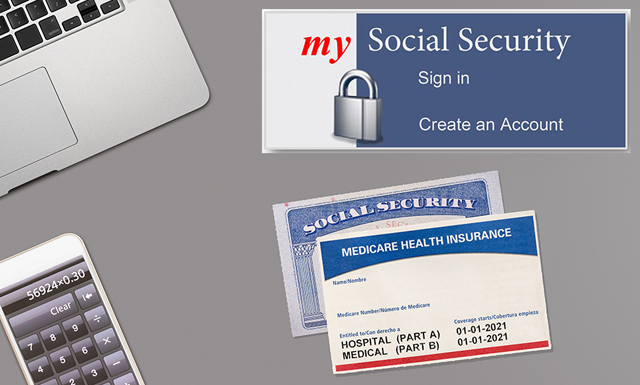
What is the Objective of Social Security?
Social Security is a set of programs established by the Social Security Act and related laws, with the aim of providing support to individuals and families in various ways. These programs serve the following purposes:
- Ensuring material security for individuals and families
- Protecting elderly and disabled individuals from high medical expenses
- Keeping families together and promoting family values
- Providing children with a healthy and secure upbringing
Through Social Security, the government aims to create a safety net that ensures that all citizens have access to basic necessities, regardless of their financial situation
What programs are included under the Social Security Act and related laws?
The Social Security Act and its related laws encompass a wide range of programs that provide support to eligible individuals and families. These programs include:
- Retirement insurance
- Survivors insurance
- Disability insurance
- Hospital and medical coverage for seniors, disabled individuals, and those with end-stage renal disease
- Prescription Drug Benefit
- Assistance with Medicare Prescription Drug Costs
- Supplemental Security Income
- Special benefits for veterans
- Unemployment insurance
- Public assistance and welfare services, including:
- Temporary assistance for needy families
- Medical assistance
- Maternal and child health services
- Child support enforcement
- Family and child welfare services
- Food stamps
- Energy assistance
These programs aim to provide a comprehensive support system for those in need, and to help ensure a better quality of life for all citizens.
What is the organizational structure of the Social Security Administration (SSA)?
The Social Security Administration (SSA) is led by a Commissioner and headquartered in Baltimore, Maryland. The central office and administrative operations, as well as computer operations, are located in Baltimore. Local Social Security offices provide individual claims services.
To gain a deeper understanding of SSA's organizational structure, visit the "Organization of SSA" section for an organizational chart.
What kind of support can I receive from my local Social Security office?
Your local Social Security office is your one-stop shop for the following services:
- Obtaining a Social Security number
- Checking your earnings record
- Applying for Social Security benefits, SSI, hospital insurance, and additional assistance with Medicare prescription drug costs
- Enrolling in medical insurance
- Receiving help with applying for food stamps
- Obtaining comprehensive information about individual and family rights and responsibilities under the law
It's important to note that the services provided by the office staff are free of charge.
What are the ways to access Social Security services?
Information on SSA's Regional Offices. The Social Security Administration has 10 regional offices led by Regional Commissioners who oversee the Social Security offices within their designated area. There are approximately 1,300 Social Security offices across the United States, the U.S. Virgin Islands, Puerto Rico, Guam, and American Samoa that directly interact with the public. Additionally, each region has several teleservice centers located mostly in major cities, handling telephone inquiries and directing callers as needed. To locate state and local coverage specialists by region, please refer to our page for SSA regional office specialists.
What makes Social Security coverage significant?
The importance of having Social Security coverage cannot be overstated. Social Security provides more than just retirement benefits. It offers financial support to your family in case of your death, and provides monthly benefits for you in the event of your retirement or disability. Your Social Security coverage is determined by your work history in a covered employment, which helps you and your loved ones qualify for these benefits. The amount of these benefits is based on your earnings record as reported to the Social Security Administration. Hence, it is crucial to make sure that your earnings record is accurate.
You can easily check your record by receiving your annual Social Security Statement three months before your birthday. This statement will show your year-by-year earnings and give you an estimate of the retirement, survivors, and disability benefits that you and your family may be eligible for now and in the future. If your statement does not reflect earnings from a state or local government employer, it may mean that your work was not covered either by a Section 218 agreement or by federal law. In this case, you should contact the employer to clarify the situation.
As a state or local government employee, there are two provisions of the law that may impact the amount of your Social Security benefits. The Windfall Elimination Provision (WEP) affects the computation of your Social Security retirement or disability benefits. The Government Pension Offset (GPO) affects the amount of Social Security benefits you receive as a spouse or widow(er).
Who are the individuals exempt from SSA's coverage?
What is the coverage of Social Security and Medicare for State and local government employees?
The coverage of State and local government employees by Social Security and Medicare is not uniform across the board. While some workers are only covered by their public pension program, others have dual coverage under both programs, and some are covered solely by Social Security. The Social Security program initially did not include State and local government employees, but this has changed over the years with the passage of legislation and the implementation of special agreements called "Section 218 agreements."
Most State and local employees have Social Security coverage as a result of these agreements between their states and the Social Security Administration. For those not covered by an agreement and not members of their agency’s public pension system, coverage was extended by federal law passed in 1991. Additionally, all employees hired after March 31, 1986, are automatically covered by Medicare, unless specifically excluded by law.
State and local government employees who are covered by Social Security and Medicare contribute to these programs and have the same rights and privileges as private sector workers. If a worker has been continuously employed by the same State or local government employer since before April 1, 1986, they may also be eligible for Medicare coverage, even if they are not covered for Social Security.
Guide: 05-10051 Understanding the Coverage of State and Local Government Employees by Social Security and Medicare
What is the significance of having insured status and how is it determined?
What is the process for earning Social Security credits?
Social Security credits are earned by working in a job that is covered under the Social Security program. Before 1978, you could earn credits by:
- Earning at least $50 in wages from a job covered under the Social Security law in any calendar quarter starting January 1, April 1, July 1, or October 1.
- Earning at least $100 in annual wages for agricultural labor in any year after 1954 and before 1978, or $50 in wages for agricultural labor in any calendar quarter in 1951 to 1954.
- Earning at least $400 in annual net earnings from self-employment in taxable years from 1951 to 1977.
- Earning the maximum taxable wages for that year.
For years after 1977, the amount of earnings required to earn a credit is determined by the Commissioner of the Social Security Administration using a formula that takes into account the national increase in average wages. This amount is published in the Federal Register before November 1 of the preceding year.
Social Security credits are earned based on total earnings that include wages from non-agricultural, military, and railroad employment, agricultural wages, and self-employment income. A maximum of four credits can be earned each year. The credits are assigned to each calendar quarter of the taxable year in proportion to the number of months that fall within each quarter. The taxable year is considered to end in the month that is completely included in the taxable year. Calendar quarters are defined as three-month periods ending on March 31, June 30, September 30, or December 31.
Is one eligible to receive monthly Social Security benefits?
The Social Security benefits and SSI payments are delivered by the U.S. Treasury Department. The standard way of receiving these payments is through direct deposit, which is an electronic transfer to an account at a financial institution such as a bank, credit union, savings and loan association, or trust company. The law requires that, starting from December 1998, all federal benefits should be paid via direct deposit, except for limited exceptions.
The payment date for Social Security benefits varies based on when you filed for the benefits. If you filed for benefits prior to May 1, 1997, payments are usually dated and delivered on the third day of the month following the payment due date. If the third falls on a Saturday, Sunday, or a federal holiday, the payment is delivered on the first preceding day that is not a weekend or a holiday. On the other hand, if you filed for benefits on or after May 1, 1997, the payment day is assigned based on the birth date of the person on whose record your entitlement is established:
- For individuals born between the 1st and 10th of the month, payments are made on the second Wednesday of each month.
- For individuals born between the 11th and 20th of the month, payments are made on the third Wednesday of each month.
- For individuals born after the 20th of the month, payments are made on the fourth Wednesday of each month.
Note that if the scheduled Wednesday falls on a federal holiday, payment is made on the preceding day that is not a holiday.
There are some exceptions to the above payment schedule, and beneficiaries in certain circumstances, such as those receiving SSI, those whose Medicare premiums are paid by the state, or those living in a foreign country, will receive payments on the third of each month. Beneficiaries can change their payment date if all those receiving benefits on their record agree to it.
The direct deposit is the preferred mode of payment for Social Security benefits and SSI payments, and you can sign up for it through your financial institution or by calling the Social Security's toll-free number. In certain countries outside the U.S., there is an international direct deposit (IDD) program, and if you live in such a country, you must participate in the IDD program. If you change your account or address, you must report it to the Social Security office. If you do not receive your payment on the payment date, you should check with your bank and then call the Social Security's toll-free number.
You may be eligible for monthly Social Security benefits if you meet certain conditions and requirements, including being:
- A disabled insured worker who has not reached full retirement age;
- A retired insured worker who is 62 years old or older;
- A spouse of a retired or disabled worker who is entitled to benefits and is at least 62 years old or has a child under the age of 16 or over the age of 16 and disabled;
- A divorced spouse of a retired or disabled worker who was married for at least 10 years and is at least 62 years old;
- A dependent child of a retired, disabled, or deceased insured worker who is under the age of 18, a full-time student under the age of 19, or has a disability that began before the age of 22;
- A surviving spouse of a deceased insured worker who is at least 60 years old or is caring for an entitled child under the age of 16 or with a disability before the age of 22;
- A disabled surviving spouse of a deceased insured worker who is between the ages of 50 and 59 and became disabled within a specified period;
- The dependent parents of a deceased insured worker who is 62 years old or older.
It's important to note that, in addition to monthly survivors benefits, a lump-sum death payment is also payable upon the death of an insured worker.
Is the taxation of Social Security benefits applicable?
Your Social Security benefits may be taxed. If you have other sources of substantial income besides your Social Security benefits, up to 85% of your annual benefits may be taxable under Federal income tax laws. The amount of benefits that are taxed will be whichever of the following is lower:
- Half of your benefits; or
- Half of the sum of your adjusted gross income, tax-free interest, and half of your Social Security benefits, minus:
- $25,000 if you're single,
- $25,000 if you're married and not filing a joint return and didn't live with your spouse at any time during the year,
- $32,000 if you're married and filing a joint return, or
- $0 if you're married and not filing a joint return and did live with your spouse at any time during the year.
Every January, we'll send you a Form 1099 (Social Security Benefit Statement), which shows the amount of benefits you received in the previous calendar year. This statement will also include a worksheet (IRS Notice 703) to help you determine if any of your Social Security benefits are subject to income tax.
To find out how much tax was withheld from your benefits, we'll send you a Form 1042S (Social Security Benefit Statement) at the end of each year. This statement will show the amount of taxes taken out of your Social Security benefits.
Who is responsible for issuing Social Security benefits and what is the process and timeline for doing so?
The distribution of Social Security benefits and SSI payments is handled by the U.S. Treasury Department, not by the Social Security Administration (SSA) processing centers. If you have inquiries regarding your direct deposit or check, please contact a Social Security office for assistance.
What are the disbursement dates?
The Social Security benefits and SSI payments are delivered by the U.S. Treasury Department. The standard way of receiving these payments is through direct deposit, which is an electronic transfer to an account at a financial institution such as a bank, credit union, savings and loan association, or trust company. The law requires that, starting from December 1998, all federal benefits should be paid via direct deposit, except for limited exceptions.
The payment date for Social Security benefits varies based on when you filed for the benefits. If you filed for benefits prior to May 1, 1997, payments are usually dated and delivered on the third day of the month following the payment due date. If the third falls on a Saturday, Sunday, or a federal holiday, the payment is delivered on the first preceding day that is not a weekend or a holiday. On the other hand, if you filed for benefits on or after May 1, 1997, the payment day is assigned based on the birth date of the person on whose record your entitlement is established:
- For individuals born between the 1st and 10th of the month, payments are made on the second Wednesday of each month.
- For individuals born between the 11th and 20th of the month, payments are made on the third Wednesday of each month.
- For individuals born after the 20th of the month, payments are made on the fourth Wednesday of each month.
Note that if the scheduled Wednesday falls on a federal holiday, payment is made on the preceding day that is not a holiday.
There are some exceptions to the above payment schedule, and beneficiaries in certain circumstances, such as those receiving SSI, those whose Medicare premiums are paid by the state, or those living in a foreign country, will receive payments on the third of each month. Beneficiaries can change their payment date if all those receiving benefits on their record agree to it.
The direct deposit is the preferred mode of payment for Social Security benefits and SSI payments, and you can sign up for it through your financial institution or by calling the Social Security's toll-free number. In certain countries outside the U.S., there is an international direct deposit (IDD) program, and if you live in such a country, you must participate in the IDD program. If you change your account or address, you must report it to the Social Security office. If you do not receive your payment on the payment date, you should check with your bank and then call the Social Security's toll-free number.
What are the benefits of hospital and medical insurance?
Medicare, a comprehensive health insurance program widely known as "Medicare," provides coverage to elderly individuals, those with disabilities, and those with end-stage kidney disease. The program is comprised of four components:
- Medicare Hospital Insurance (Part A) covers inpatient hospital care, inpatient care in a skilled nursing facility, home health care, and hospice care.
- Medicare Medical Insurance (Part B) covers physician services, outpatient hospital services, outpatient physical therapy, other medical services, and supplies and equipment that are covered by Part A.
- Medicare Advantage Plans (Part C) are private plans that offer all Medicare Part A and Part B benefits, such as HMOs, PPOs, or Private Fee-for-Service Plans. Some plans also provide prescription drug coverage.
- Medicare Prescription Drug Benefit (Part D) provides coverage for outpatient prescription drugs for eligible elderly and disabled individuals.
The Centers for Medicare & Medicaid Services (CMS) is responsible for administering the Medicare program and establishing standards for hospitals, nursing facilities, home health agencies, hospices, and other providers and suppliers to receive payment for Medicare-covered services and items. The CMS also sets standards for Utilization and Quality Peer Review Organizations, intermediaries, and carriers in making payment and coverage decisions.
The Social Security Administration (SSA) plays a role in the Medicare program by offering beneficiary services, including processing applications for enrollment in Part A and B, responding to beneficiary inquiries, and performing data processing support, premium billing, and collection activities.
If a beneficiary is receiving Social Security benefits, Medicare Part B premiums will be deducted from those benefits. If the monthly benefit does not cover the full deduction, the beneficiary will be billed separately. Beneficiaries may also choose to have their Medicare Part C (Medicare Advantage) and prescription drug plan premiums deducted from their Social Security benefit. If a reduction in the Part B premium is included in the Medicare Advantage plan, Social Security will take this reduction into account once notified by the CMS.
For additional information on Medicare premiums, visit the Medicare & You webpage.
Getting in Touch with Social Security: Information and Options
If you are deaf or hard of hearing, you can reach us using our TTY number, 1-800-325-0778. We are committed to maintaining your confidentiality and providing you with accurate and courteous service. That is why we may have a second representative monitor some of our telephone calls.
